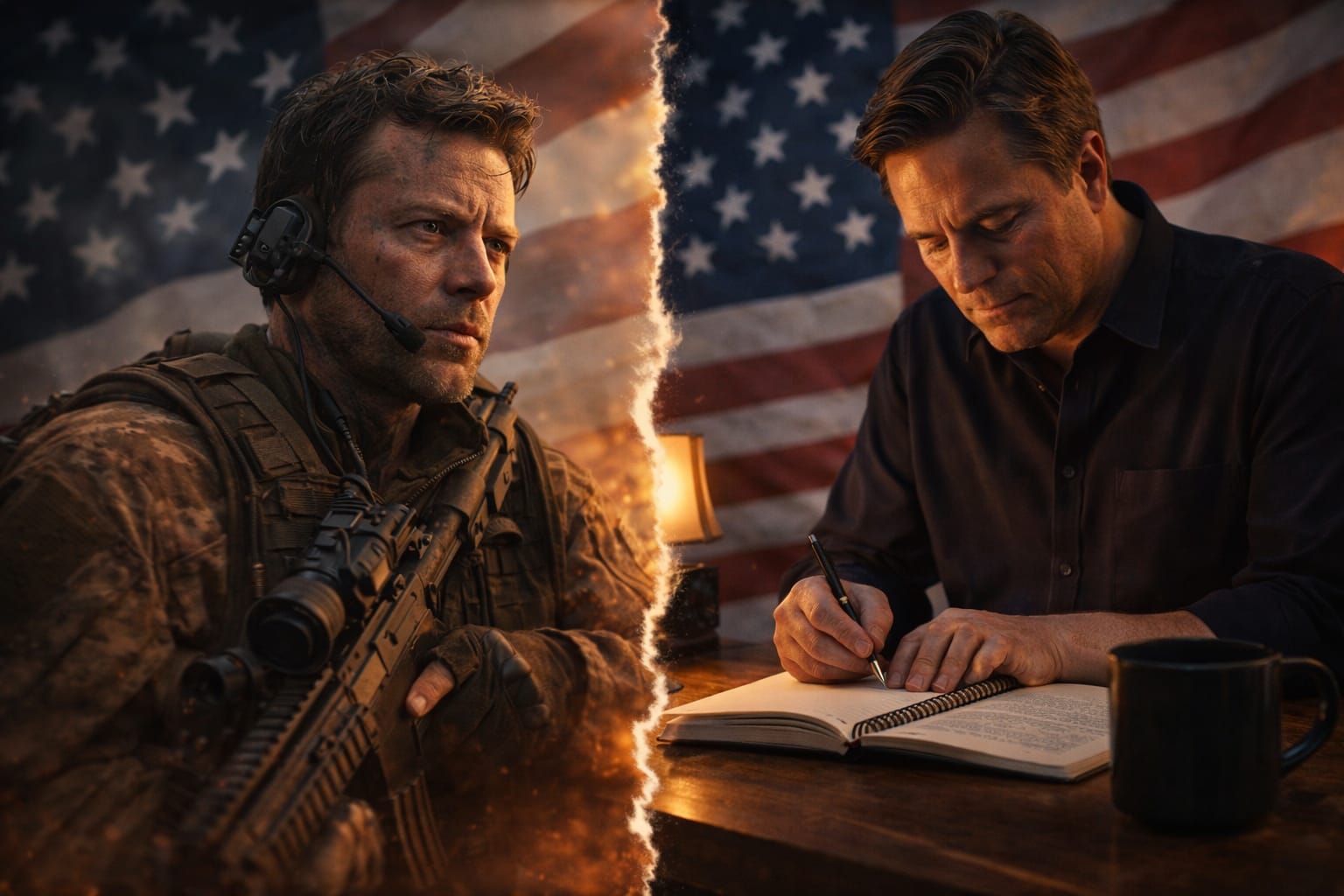
The Tank Commander Who Could Not Sleep
I once read a thriller where a man defused a nuclear device, wiped his hands, and went to lunch. No tremor. No bad dream that night. The author had spent three pages on the wiring of the bomb and not one sentence on the cost of being the person who had to touch it. I put the book down and never picked it back up.
That is the line. On one side you have military fiction that respects its subject. On the other you have cosplay. The cosplay loves the hardware. It can tell you the muzzle velocity, the loadout, the designation of the radar. What it cannot tell you is what any of that does to a human being. And readers feel the difference even when they cannot name it.
I write under P.S. Parsonson. My first novel, The Tempest Toss, comes out this fall. It is Book One of the John Hunter series. I am a chemist by training, twenty-two years in research, a master’s out of Georgia Tech. So believe me when I say I understand the pull of the technical detail. I love a clean mechanism. The temptation to show all your work is real. It is also a trap.
The Threat Is Not the Story
Here is the thing people get backward.
The threat is not the story. The person who has to stop it is the story.
An EMP can darken a city. That is a fact, and it is the engine of my book, and I spent real time with the actual science of it so I would not embarrass myself in front of anyone who knows better. But the EMP does not care. It has no fear, no marriage, no kid asleep in the next room. It cannot lose. Drama lives in the thing that can lose. Put the smartest weapon in the world on the page and it is inert until a frightened, tired, decent person stands between it and everyone they love.
Clancy understood this, whatever you think of his prose. People remember The Hunt for Red October as the submarine book. It was the submarine book. But the reason it worked was Marko Ramius, a captain grieving a dead wife and choosing to betray everything he had served. The boat was magnificent. The man defecting on the boat is why you turned the page. Strip out Ramius and you have a very long equipment manual.
So when I build a scene, I start with the person, not the gear. What does he want. What is he afraid of. What will it cost him to do the right thing. Then, and only then, do I bring in the missile.
Get the Jargon Right, Then Get Out of the Way
Authenticity is not the same as exhaustiveness. This trips up a lot of new writers, and it tripped me up too in early drafts.
You have to get the language right. If your character is a Coast Guard officer and he calls the bridge “the cockpit,” every reader who has stood a watch will close the book. I am a member of the Coast Guard’s Authors Program for exactly this reason. I want the people who lived it to read a line and nod, not wince. The vocabulary is a promise. It tells the reader you did the homework.
But here is the part the cosplay crowd misses. Getting the word right does not mean using every word. A character does not narrate his own acronyms. A real operator does not explain the system to the other operator who already knows it. When two professionals talk shop, they talk in shorthand, and you let the reader catch most of it from context. Drown the page in jargon and you are no longer writing a novel. You are writing a brochure with a body count.
The rule I keep taping to my monitor: one precise detail beats ten generic ones. Tell me the man checks the lanyard twice out of habit and I trust you completely. List every item on his belt and I trust you less, because now I can see you reaching.
If you want the longer version of how I run down the real-world details before a single scene gets written, I laid it out in the research behind authentic operations.
Authenticity Is Just Trust By Another Name
Why does any of this matter. Because a thriller runs on trust, and trust is fragile.
The genre asks a lot of the reader. Stay up too late. Believe a man can do impossible things under impossible pressure. The reader will grant you all of it, but only if you have earned it. And you earn it in the small places. The weight of the gear. The way fear actually moves through a body, the dry mouth before the cold hands. The boredom that surrounds the terror, because real operations are mostly waiting. Get those right and the reader signs a contract with you. They will follow you anywhere.
Get them wrong and the spell breaks. One false note, one hero who feels nothing after killing a man, one gadget that works because the plot needs it to, and the reader is no longer inside the story. They are outside it, watching you fail. You cannot win them back.
I did the strange, specific things to chase that trust. I read Cold War history until the politics felt like weather. I dug into the real EMP science instead of inventing convenient physics. I corresponded with a former KGB general, because I wanted the other side written by someone who would not flinch at a lazy caricature. Years ago I even wrote to Tom Clancy himself. Not for a blurb. To learn.
None of that shows up as a lecture in the book. It shows up as confidence. The reader cannot see the research. They can only feel its absence, and they feel it instantly.
The Cost Is the Point
Strip everything else away and this is what I believe. The best military thriller is not about the threat. It is about what stopping the threat does to the person who stops it.
The bomb gets defused on page 300. The interesting question is what the man who defused it is like on page 301. Does he sleep. Does he go home the same person who left. The hardware is the setting. The human is the subject. Confuse the two and you have written cosplay, and the people who actually served will know, and so, quietly, will everyone else.
That is the standard I am holding myself to with The Tempest Toss. I will let you decide this fall whether I cleared it.
If you are writing toward that same bar, the other craft problem worth your attention is rhythm. I wrote up how I think about keeping a thriller moving without exhausting the reader. Authenticity earns the trust. Pacing is how you spend it.
The Tempest Toss is available now on Amazon
Book 1 of the John Hunter series. Real EMP science, Cold War history, and twenty-two years of research. Paperback and Kindle.